Emendavimus
A VR narrative experience confronting participants with an ethical dilemma about human-cyborg augmentation, built by team iHuman as SFU's IAT 499 graduating project.
Context
Team project: SFU IAT 499, Graduation Project, supervised by Dr. Bernhard Riecke. Emendavimus is a VR narrative experience built by a student team, iHuman, around a speculative future in which humans can choose to convert into cyborgs. Rather than argue that question from the outside, the team built the experience to make the participant face it directly: partway through, the participant is asked to decide whether to preserve a child’s humanity or convert them into a cyborg to save them. Only afterward do they learn that the choice revealed more about their own values than about the child’s fate.
VR was a deliberate choice over a screen-based format, not a default. The team’s own research framing was that embodying the dilemma, rather than reading or watching an argument about it, would “give [users] a stronger stake in the matter as they are directly involved mentally and physically,” aiming for, in their words, “a better informed choice at the end of the simulation.”
Research & conceptual grounding
The team grounded the premise in posthuman theory rather than treating “human vs. machine” as a purely speculative hook. Their research cited Samuel Butler’s 19th-century argument (via Su & Jin’s 2020 rereading in Comparative Literature Studies) that humans were already functionally inseparable from their machines, alongside contemporary posthuman discourse on medical technology blurring the line between life and death. They also studied how other media had handled the same tension, using the Terminator franchise and Detroit: Become Human as reference points for what makes a “human vs. machine” story land emotionally rather than just conceptually.
The questions driving the premise, in the team’s own words: What are the psychological implications of the rise of the cyborg? How do we raise awareness about the everyday use of technology on us? Are we human or cyborg? What is the ethical dilemma of comparing human to cyborg?
The team’s own final presentation adds the specific case for VR over a screen-based medium: a cited VR-research article on reproducing hard-to-access experiences “in the lab or at home, making them accessible to both the public and researchers,” and a three-stage model (perceptual experience, cognitive shift, and finally behavioral change) that the team used to argue why embodiment, not just narration, was necessary for the dilemma to land.
Story architecture
The experience is structured across eight stages, moving the participant from a real-world framing device into the dilemma and back out again:
Pre-VR → Transition into VR → Introductory Scene → Cyborg → Human → Decision → Final scene → Post-VR

The eight-stage sequence, from the team’s own storyboard: a nurse-and-wheelchair framing device on either end, with the Cyborg/Human/Decision stages carrying the actual dilemma. Scroll to see the full width.
For every stage, the team mapped eight separate dimensions of the experience: not just what happens, but what the participant hears, what’s happening in the virtual environment, what they’re likely thinking and feeling, why the scene exists relative to the project’s goal, and how that stage’s effect could even be assessed afterward. It’s a more rigorous framework than a conventional storyboard, closer to a service-design blueprint applied to a single VR session.
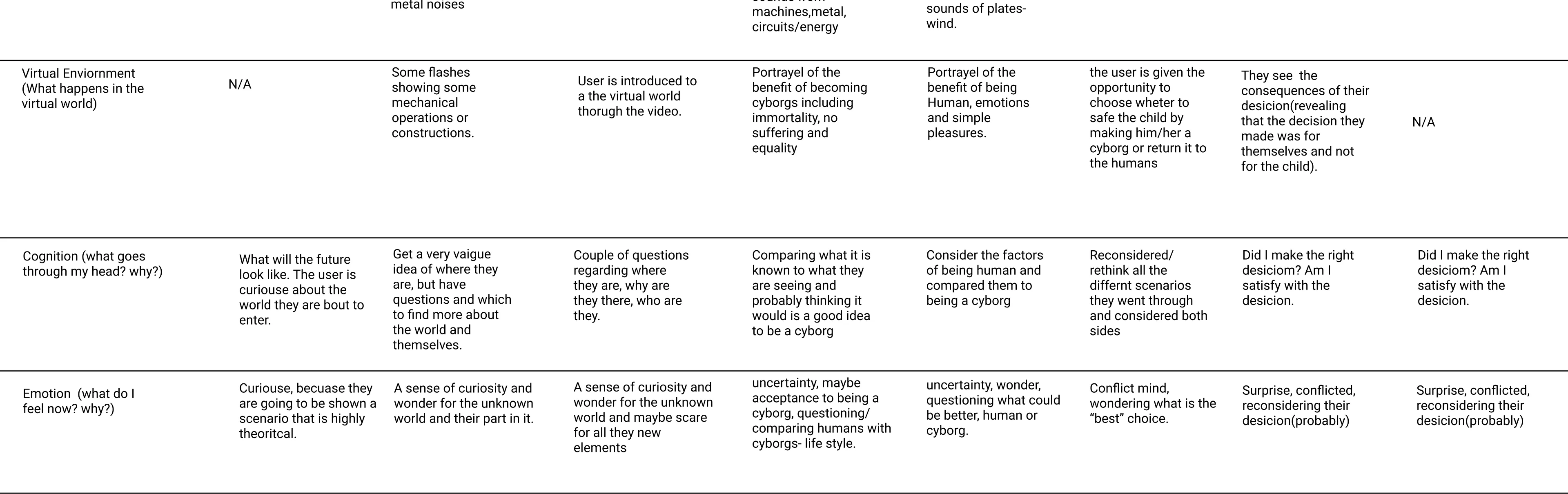
Three of the framework’s eight rows (Virtual Environment, Cognition, and Emotion) across all eight stages, including the exact language the team used for the Decision and reveal. Scroll to see the full width.
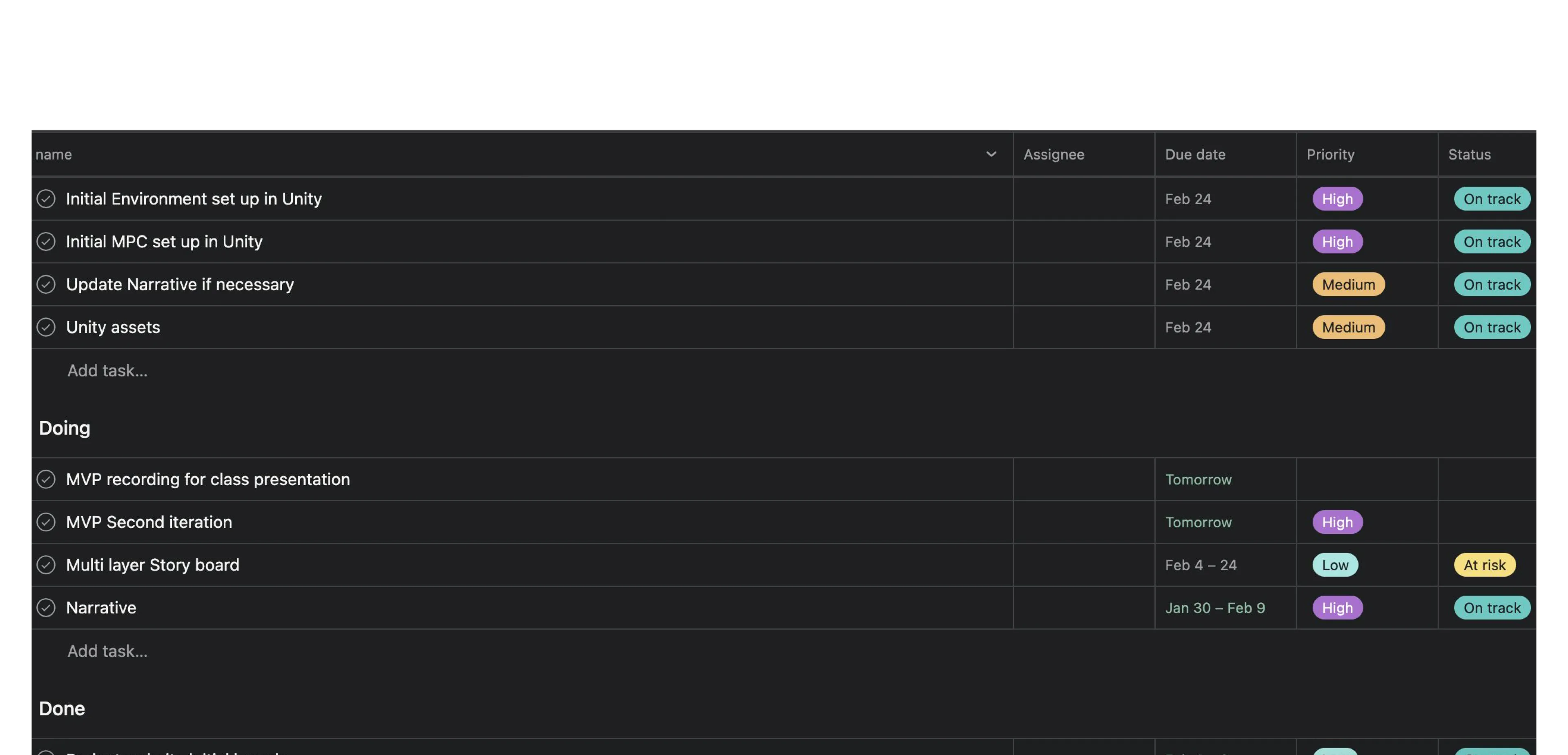
That ending wasn’t the team’s first version. An earlier storyboard draft (visible in the hero sketches above) ended with the participant choosing to “become the death machine and supreme keeper of order commanded by the main frame(global order)” or “become humans last beacon of hope.” After sharing that direction for feedback, the team’s own sprint notes record the response plainly: “Guns shot — what happens later? We changed it to a different ending.” That, paired with feedback that the project’s scope was spread across too many scenarios, led to a deliberate reverse-narrative pass: “we decided to focus on working with only two scenarios for humans and cyborgs and focus work from the end backwards, giving major importance to the ending dilemma and adjusting the story to it, making it simpler but still engaging and cohesive.” The child-rescue dilemma and its reveal (the version that shipped) is what that pass produced.
Building the experience
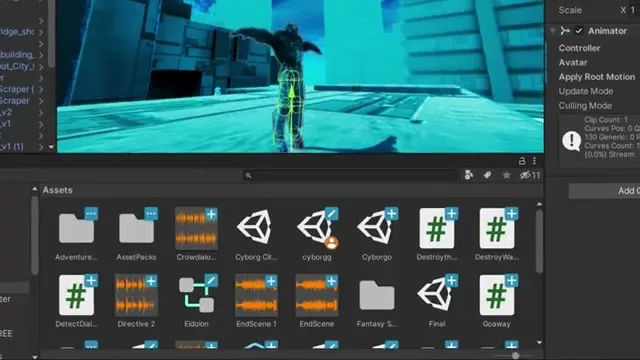
Unity development produced a real, built-out city environment. The team’s own final video shows the editor mid-session: a rigged character with a configured Animator component, and a save prompt for a scene file named cyborgg.unity. That sits alongside a project structure with scenes matching the storyboard’s own stage names (IntroScene, HumanCity, EndScene, LastScene).
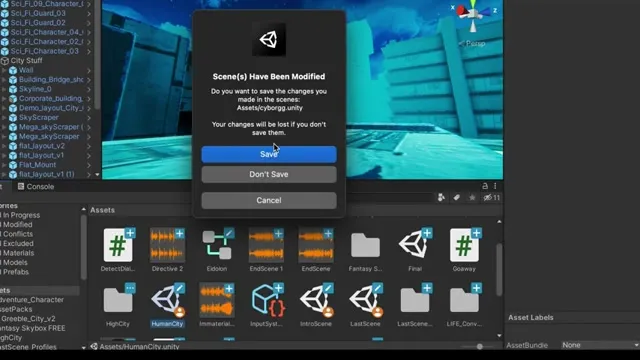
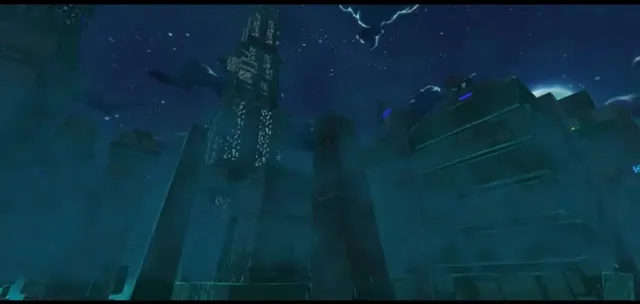
What shipped, in the team’s own words, was “a VR story-based experience and not an interactive simulation”: first-person view, continuous-movement locomotion, and spatial narration through noise-cancelling headsets, with the participant free to explore each scene within a time limit. There’s no object-manipulation or dialogue system in the delivered build; the team had debated building one, but weighed it against “the reward vs. time taken… as compared to simply experiencing the simulation,” and the narrative carried the experience instead.
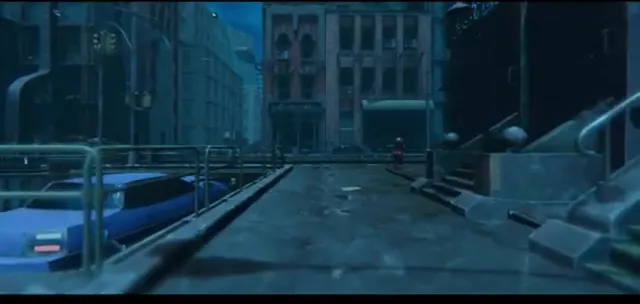
Both are frames from the Emendavimus trailer. They’re cut entirely from in-engine footage, no concept art.
Testing the experience
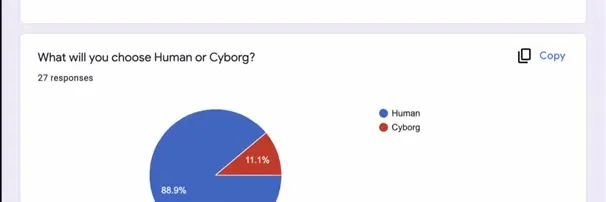
Before touching Unity, the team tested the narrative itself through a video-based MVP, iterated more than once, and put it in front of real people: “we tested the cinematic video with new changes with 27 users, and we were satisfied with the results.” That’s an informal in-class test, not a controlled study, but it’s a real, specific number, not a vague claim of “positive feedback.” The same round surfaced a Google Forms survey of those 27 respondents, asking which ending they’d choose:
88.9%
Of 27 respondents to the team’s own survey, asked to choose between the story’s two endings: human or cyborg.
Testing didn’t stop at the video. The team ran the built experience with real participants in a physical mixed-reality setup: a dark, curtained room, a participant wheeled in by a team member playing a nurse, then greeted by a teammate in costume as the cyborg or the “technologically enhanced human,” before putting on a headset and controllers to enter the VR portion itself. Two concrete, mechanical gaps came out of that round, each with a proposed (not yet built) fix:
Interaction
- Players expected to interact with more than movement, since they were holding controllers. The team's proposed fix was a gaze-based navigation system instead.
Pacing
- The decision scene ran long enough to lose narrative momentum. The team proposed shortening the platform or adding more life to the scene.
The most important finding wasn’t on that list. There was never meant to be a literal child: the decision was designed to be about the participant themselves, remain a cyborg or become human, with the child written in only as “an imaginary plot device and a twist in the story.”
One participant’s own account, recorded on camera, shows how it actually landed: “I was in a room, a grey room, and I saw this projection on the entire wall across from me… In the end I chose human, because I felt like — yeah, this child should choose for themselves when they’re older, and if I make that choice now, then they can’t do that.” The twist itself never came through. The team said so directly, rather than smoothing it over:
The misconception… was not well communicated as part of the narrative, and so was lost on the users.
The team's own retrospective
World & asset approach
The two perspectives the participant moves through were each built around a specific emotional register: a “Cyborg perspective” sequence organized around immortality and equality (“as a cyborg, you feel no pain or suffering… all cyborgs are treated equally and there is no ranking”), and a “Human perspective” sequence organized around emotion, using flashbacks to showcase feelings, sadness, and small pleasures like food. A helper-bot character introduces the participant to the world early on, answering their questions rather than leaving them to infer the setting on their own.
Rather than model every environment and character from scratch, the team deliberately sourced existing VR-ready environment, character, and hand assets, reasoning, in their own words, that “using already existing assets is a smarter move that saves time” on a project where the narrative and interaction design were the actual point. That’s a real scope decision, not a shortcut hidden from the final result: it’s why this case study doesn’t show the assets themselves, since they aren’t the team’s own design work.
My role
A team planning note from February 4 (visible directly in the team’s own final video) names my specific responsibility on Emendavimus: co-authoring the project’s VR Design Document alongside teammate Emanuel. “Emmanuel and Asher go over the document to fill out.” Team iHuman was three people: Emanuel, Nazanin, and me. Beyond that credited item, the rest of the record (research, the reverse-narrative storyboard pass, MVP iteration, and Unity development) documents work the three of us did together, not divided into individually-tracked parts, and I’m presenting it that way rather than overstating a solo contribution the record doesn’t support.
Reflection
What stayed with me from Emendavimus wasn’t the sci-fi premise. It was the discipline underneath it. The multilayered storyboard forced the team to justify every stage against a real question (“why does this scene exist, and how would we even know if it worked?”) instead of just sequencing cool moments. And the reverse-narrative pass (designing the ending dilemma first, then building backward toward it) was a direct response to feedback that the team was trying to do too much at once. Simplifying the scope didn’t weaken the project; it’s the reason the ending has a clear point of view at all.
The team’s own closing account of the testing was the part I respect most in hindsight: naming, on camera, exactly where the central twist didn’t land with real participants instead of quietly smoothing that over. A design idea being clever in the room and legible to a stranger wearing the headset are two different bars, and only one of them actually matters.